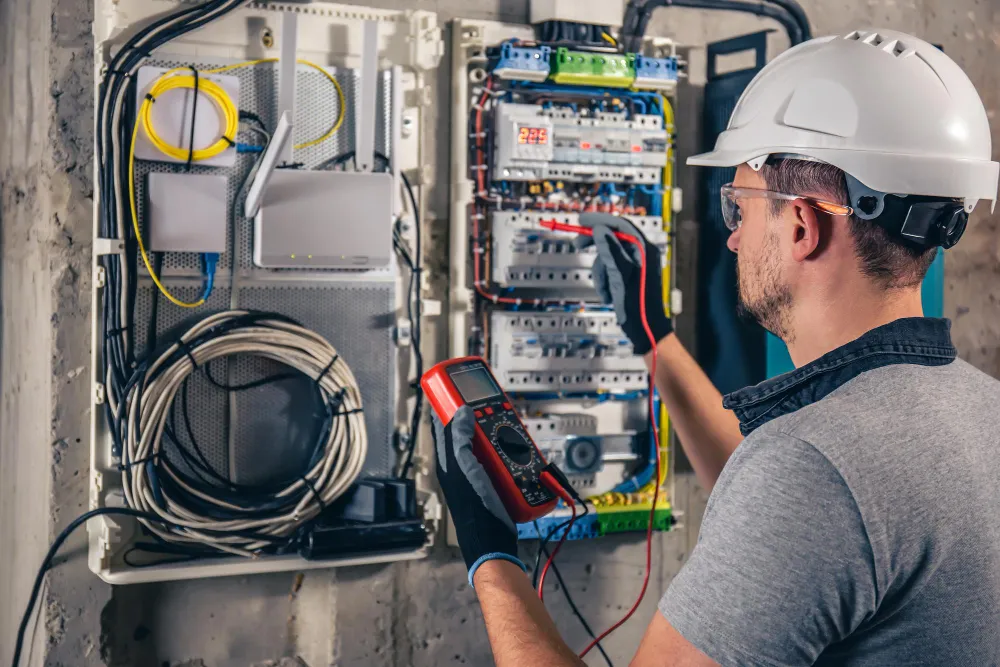
Safety issues from old wiring or unlicensed electricians are hard to see until a shock or short circuit happens. Indian Mestri connects you with certified residential electricians who design safe circuits, use branded protection devices and document what they install.
Government-licensed electrical contractors – Wherever applicable, we work with government-licensed electrical contractors, not unregistered helpers, so your installation meets code and insurance requirements.
Load-based circuit and cable design – Circuits, cable sizes and breaker ratings are calculated from your actual appliance list, reducing overheating, nuisance tripping and premature cable ageing.
Proper earthing and RCD protection – Earthing systems and residual-current devices (RCCBs / RCBOs) are installed as standard, greatly lowering the risk from electric shock and earth leakage.
Neat, labelled installations for easy future work – Clean DB layouts, labelled circuits and organised junctions make later additions or repairs faster, cheaper and safer for any residential electrician.
Co-ordination with interior designers – Electrical layouts are aligned with false ceilings, wardrobes and furniture, avoiding visible conduits and awkward switch positions that spoil interior design.
Phased rewiring plans for budget control – If a full rewire is too expensive at once, electricians prioritise high-risk circuits—kitchen, AC, geysers—so safety improves immediately while other areas wait.
Testing and documentation at handover – Key test results and basic circuit details are documented at the end of the project, giving you a reference instead of relying on the memory of a single electrician.
How we design safer electrical systems for homes
Designing a safe home electrical system starts long before the first wire is pulled. Our residential electricians begin by listing all current and future appliances, including ACs, geysers, ovens and pumps. They then group loads into circuits, ensuring no single line is overloaded. Cable sizes and breaker ratings are chosen from this data, not guesswork. Special attention is given to wet areas like bathrooms and kitchens, where additional protection is required. By designing from load backwards, rather than simply extending whatever wire is nearby, we greatly reduce the chance of overheating, nuisance tripping and dangerous faults.
When rewiring is essential and when upgrades are enough
Many homeowners are unsure whether they need full house rewiring or just targeted upgrades. During an inspection, Indian Mestri electricians check cable condition, insulation, joint quality, earthing and DB configuration. If wiring is very old, brittle or heavily tampered with, a complete rewire is usually the safest choice. However, in many flats only certain circuits—like kitchen or AC lines—are overloaded or outdated. In such cases, we recommend phased rewiring that tackles the riskiest areas first. This staged approach improves electrical safety significantly without demanding a huge one-time expense.
Coordinating electrical work with interior design
Modern homes rely heavily on good lighting and well-placed sockets. Our electricians therefore work closely with interior designers or homeowners to finalise switchboard locations, light points and power sockets before false ceilings or fixed furniture are installed. Fan boxes, cove lights, TV points and work-from-home desks are all planned on drawings first. This coordination avoids last-minute chases through freshly plastered walls or ugly surface conduits that spoil the design. The result is a home that not only looks good but has electrical points exactly where you need them.
Electrical tests we perform before handover
Before energising a new or upgraded electrical system, Indian Mestri electricians perform a series of basic but essential tests. These include continuity checks to confirm that every circuit is complete, insulation resistance tests to ensure cables are not leaking current, polarity checks so switches break the correct conductor, and RCD trip tests to verify protection devices operate within safe limits. Any issues detected are corrected immediately. These tests, combined with neat documentation of circuits and breaker ratings, give you confidence that your home wiring meets modern safety expectations.
Want to make your home electrically safer?
Share your existing issues or upcoming project plans, and our verified residential electricians will recommend practical upgrades that balance safety, cost and convenience.
What electrical jobs can Indian Mestri help me with?
Indian Mestri can support almost any residential electrical requirement, from small repairs to complete rewiring. Common requests include installing new lights and fans, adding extra sockets for work‑from‑home setups, shifting points during interior work, connecting geysers and kitchen appliances, and rectifying issues like frequent tripping or sparking switches. For new constructions or major renovations, our partnered electricians design and execute full wiring layouts, including distribution boards, individual circuits for heavy‑duty appliances, and proper earthing arrangements. They can also advise on locations for internet routers, backup power connections and other modern conveniences. Because all professionals on our platform are screened for technical competence and reliability, you get a level of consistency and accountability that is hard to find when relying purely on informal references.
How do you ensure electrical safety in my home?
Electrical safety is a combination of good design, correct installation and periodic checks. Our electricians start by understanding your expected load – how many air‑conditioners, kitchen appliances, pumps, heaters and electronic devices you intend to use. Circuits are then planned so that heavy‑duty equipment has its own dedicated lines and protective devices. Cables are selected based on current‑carrying capacity, insulation quality and routing method, and are always run inside suitable conduits for mechanical protection. Earthing systems are designed to keep fault currents away from people and equipment, while MCBs and RCCBs are installed to isolate circuits during overloads or leakage. Before handover, key circuits are tested for continuity, polarity and insulation resistance. Homeowners are also briefed on simple good practices, such as avoiding daisy‑chained extension cords and not overloading single sockets. This holistic approach significantly reduces the risk of shocks, fires and premature appliance failures.
Do I need to rewire my entire house, or can I upgrade only certain parts?
Full rewiring is not always necessary. In many homes, only certain circuits or rooms are overloaded or built with very old materials that no longer meet safety expectations. During a site visit, Indian Mestri electricians examine your existing wiring, distribution board, earthing and visible fixtures. They look for tell‑tale signs such as brittle insulation, frequent tripping, overheating at sockets and makeshift joints. Based on this assessment, they may suggest a phased upgrade plan. For example, you might choose to first renew all kitchen, bathroom and air‑conditioner circuits, which typically carry higher loads, and postpone lower‑risk areas to a later stage. In some cases, however, the wiring may be so outdated or tampered with that a complete overhaul becomes the safest and most economical long‑term solution. Whatever the recommendation, you receive a clear explanation of the reasons behind it and an estimate that differentiates between essential safety work and optional convenience upgrades.
Can you coordinate with my interior designer or builder during electrical work?
Yes, our electricians are comfortable working within larger project teams that include interior designers, architects and builders. In such setups, the designer typically specifies the look and location of lights, switches and other fixtures, while our electricians translate those ideas into technically sound wiring and protection schemes. Early coordination is encouraged so that ceiling levels, furniture layouts and electrical routing support each other. For example, it is important to plan fan boxes, cove lighting, TV points and work‑from‑home desks before false ceilings or fixed furniture are finalised. Our role is to raise any feasibility or safety concerns in advance, so design intent is respected without compromising performance. Clear communication and shared drawings help avoid last‑minute changes, rework and hidden joints that can weaken the system.
How are electrical service charges generally structured?
For small repair jobs, electricians may charge a visit fee along with additional amounts for time spent and materials used. For larger scopes like new house wiring or major upgrades, pricing is usually based on an itemised BOQ or per‑point rates. BOQ‑based quotes list activities such as circuit wiring, DB installation, earthing, fitting fixtures and testing, along with quantities and unit rates. Per‑point models assign a fixed charge to each switchboard, light, fan or socket. In both cases, Indian Mestri encourages clear written documentation that separates labour and major materials wherever practical. This transparency allows you to understand exactly what is included, compare between proposals and manage your budget more confidently. It also reduces disputes later because expectations around scope and payments are clearly recorded from the beginning.