
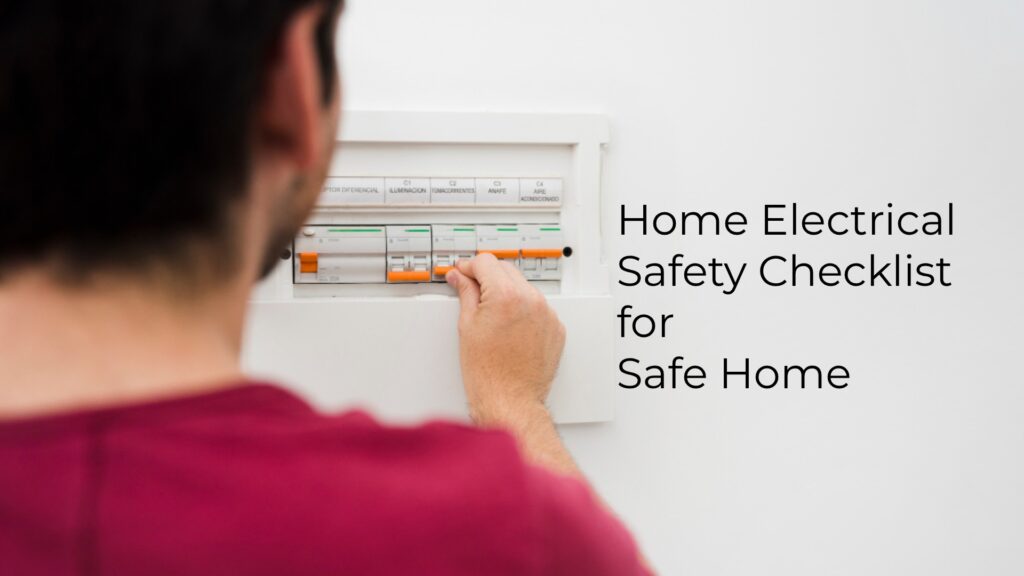
Electricity powers every corner of your home, from the fan spinning above your bed to the geyser heating your morning shower. Yet most Indian homeowners give their electrical systems very little attention until something goes wrong. A flickering light, a tripped breaker, or a faint burning smell are all warning signals that get ignored for weeks, sometimes months.
According to the Bureau of Indian Standards (BIS), approximately 42% of building fires in India are caused by electrical short circuits. Roughly 5,000 deaths occur each year from electrical-related accidents. These are not statistics about industrial settings. Many of these incidents happen inside homes, in apartments and independent houses across cities like Bangalore, Mumbai, Hyderabad, and Chennai.
The good news is that most of these accidents are completely preventable. A structured home electrical safety checklist, followed regularly, can protect your family and property from hazards that build up silently over time. This guide covers everything you need to know, from your distribution board to your bathroom switchboard, and is built around Indian electrical standards, Indian weather conditions, and the real challenges Indian homeowners face every day.
Why Electrical Safety at Home Cannot Be an Afterthought
In India, homes often carry multiple high-load appliances: air conditioners, geysers, refrigerators, washing machines, induction cooktops, and microwave ovens. All of these run on a 230V single-phase supply, and many older homes were simply not wired to handle this kind of load.
Add to this the reality of power fluctuations, monsoon humidity, and the common practice of using low-quality extension boards from local markets, and the risk of electrical accidents becomes significant. Old wiring insulation degrades over time. Connections loosen inside walls and switch boxes. Without a routine electrical safety inspection, these hazards become invisible time bombs.
Doing a proper electrical check does not require an engineering degree. Most of the checklist items below involve simple visual observation and basic awareness. Anything beyond that calls for a licensed electrician, and knowing when to call one is itself a core part of being a responsible homeowner.
Section 1: Distribution Board (DB) and Circuit Breaker Safety
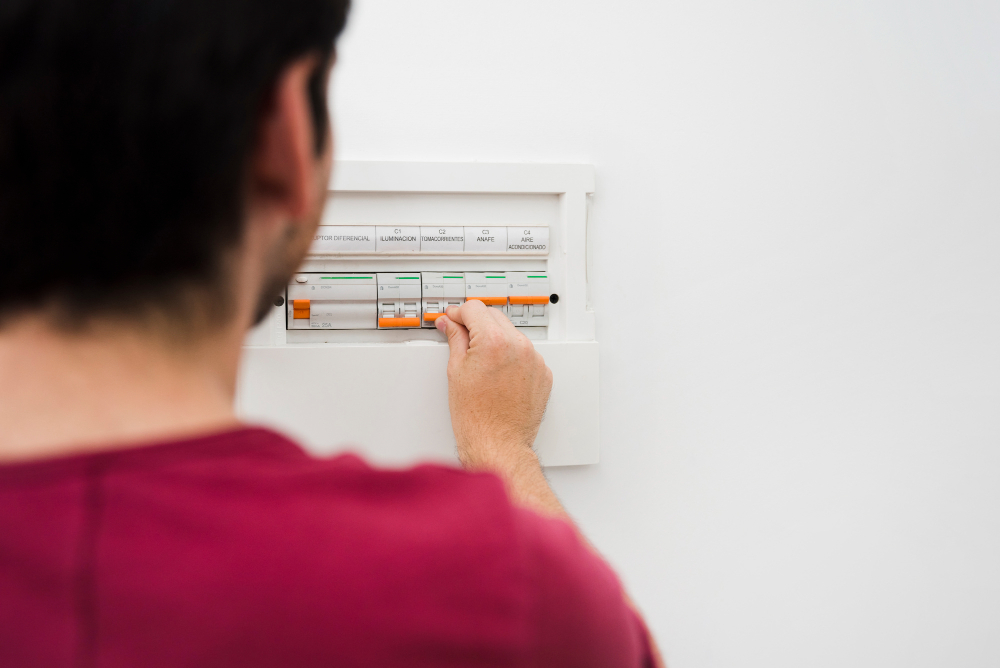
Your Distribution Board, commonly called the DB box or fuse box, is the nerve centre of your home’s electrical system. Every circuit in your home runs through it, and the safety devices inside it are your first line of defence against fires, short circuits, and electric shocks.
What to check:
MCB (Miniature Circuit Breaker) condition: Your DB should have individual MCBs for each circuit, covering lights, fans, power sockets, AC circuits, and the geyser. Check that all MCBs are in the ON position during normal use and none are stuck or showing signs of heat damage. A breaker that trips repeatedly points to an overloaded or faulty circuit and needs immediate attention from an electrician.
ELCB or RCCB installation: As per Indian electrical safety standards, an Earth Leakage Circuit Breaker (ELCB) or Residual Current Circuit Breaker (RCCB) rated at 30mA should be installed in your DB. This device cuts power within milliseconds if it detects current leaking to earth, which is exactly what happens when someone gets an electric shock. Many older homes in Bangalore and other cities still do not have this protection. If your DB only has fuses or old MCBs with no RCCB, contact a qualified electrician from Indian Mestri’s electrical contractors team to get this addressed urgently.
Earthing connection: Proper earthing is non-negotiable. Your DB should have a clear earthing terminal, and the earthing wire must be connected to a proper earth pit. Check for any loose or corroded earthing connections at the DB. Earthing failures are one of the most common causes of fatal electric shocks in Indian homes.
DB enclosure condition: The DB panel cover should always be closed. No open holes, no exposed live wires, no burning smell. The area around the DB should be dry and free of moisture, particularly important during the Bangalore monsoon season.
Section 2: Electrical Wiring and Cables
Wiring forms the skeleton of your home’s electrical system. Problems hidden inside walls are hard to detect, but there are visible signs that indicate trouble.
What to check:
Visible wiring condition: Inspect any exposed wiring in your utility area, terrace, parking, or service rooms. Look for frayed insulation, cracked outer sheathing, or wires that have been chewed by rodents. Any damaged wire is a direct fire and shock risk.
Wire routing: Wires should run through proper conduit pipes, especially in wet areas. Wires taped together and run along walls without conduit protection are a sign of substandard installation. Similarly, wires passed under carpets, door frames, or through holes without proper conduit fittings create wear points over time.
Age of wiring: If your home is more than 15 to 20 years old and has never had a rewiring job, the insulation on the wires may have degraded significantly. Older homes in Bangalore’s established neighbourhoods like Indiranagar, Jayanagar, and Rajajinagar often have aluminium wiring installed decades ago, which carries a higher risk compared to modern copper wiring. An electrical inspection can confirm whether a rewiring upgrade is needed.
Wire colour coding: BIS-mandated wire colour standards in India use red or brown for phase (live), black or blue for neutral, and green or yellow-green for earth. Wiring that does not follow these colour codes makes fault-finding dangerous and should be flagged during any inspection.
Section 3: Electrical Sockets, Switches, and Outlets
Sockets and switches are the most frequently used parts of your electrical system, and also the most overlooked.
What to check:
Warm or hot sockets: Touch the faceplate of your sockets gently. They should feel cool or, at most, slightly warm. A socket that feels hot to the touch indicates a loose connection or overloading, both of which can cause a fire.
Discolouration and scorch marks: Yellow or black staining around a socket or switch plate is a clear sign of sparking or heat damage. Stop using that socket immediately and have it replaced.
Loose fittings: Sockets that wobble or have loose faceplates allow moisture and dust inside the electrical box, increasing arc risk. Tighten or replace them.
BIS-certified products: Always insist on ISI-marked sockets, switches, and modular plates. Under the September 2024 update to IS 302 (Part 1) by India’s Ministry of Commerce and Industry, all household electrical appliances and fittings must meet BIS certification standards. Using uncertified products, especially cheap sockets from street markets, puts your entire home at risk.
Wet area sockets: In bathrooms and near kitchen sinks, sockets must have weatherproof covers and should ideally be installed away from direct water splashing. Indian electrical standards (IS 732:2019) specify that socket outlets in wet locations must meet at least IP44 weatherproof rating.
Section 4: Appliance Safety and Load Management
Every appliance in your home draws a specific amount of current. Ignoring appliance condition and load distribution is one of the top causes of household electrical fires.
What to check:
Extension board quality: The single most dangerous habit in Indian homes is daisy-chaining cheap extension boards. A multi-socket extension board bought for Rs. 150 from a roadside vendor is not rated to handle an AC, a geyser, or a refrigerator. Always use ISI-marked, fuse-protected extension boards, and never plug high-load appliances like ACs, geysers, or washing machines into extension boards.
Appliance cord condition: Inspect the power cords of your refrigerator, washing machine, television, and other appliances. Cords that are kinked, cracked, or have the outer insulation peeling away need to be replaced. Never use a damaged cord even temporarily.
Overloading check: If a particular room’s breaker trips frequently, it is a sign that the circuit is drawing more current than it is rated for. This happens commonly when a new AC or a washing machine is added to an older circuit. The fix is not to reset the breaker repeatedly but to have an electrician assess the load distribution and add a dedicated circuit if needed.
Geyser safety: Geysers are involved in a surprisingly high number of electrical accidents in Indian bathrooms. Always turn off the geyser MCB before using the shower. Install a separate dedicated circuit for your geyser with its own MCB, and ensure earthing at the geyser point is solid. Many electricians also recommend installing an RCCB specifically on the geyser circuit.
AC installation: Air conditioners in India are typically installed on a 16A or 20A dedicated circuit. Check that your AC is connected to the correct rated socket and that the wiring running to it is the appropriate gauge. Undersized wiring supplying an AC is a fire risk during peak summer months.
Section 5: Monsoon Electrical Safety for Indian Homes
India’s monsoon season brings a unique set of electrical hazards that homeowners in Bangalore, Chennai, Mumbai, and other cities need to prepare for specifically.
What to check:
Outdoor and terrace wiring: Any wiring or fixtures on your terrace, balcony, or external walls must be in weatherproof conduit and use weatherproof fittings. Exposed junction boxes on terraces should be sealed with appropriate weatherproof enclosures.
Water seepage into walls: Seepage through walls during heavy rains can reach electrical conduits inside. If you notice that switches or sockets in a particular room behave erratically during or after rain, that is a sign of moisture infiltration. Do not ignore this.
Temporary outdoor connections: During festival seasons or outdoor events, homeowners often run temporary electrical connections for lighting and sound. These connections must use properly rated outdoor cables, weatherproof connectors, and must be routed safely. All such temporary connections should be done by a licensed electrician.
Water pumps and motors: Submersible pumps and surface-mounted water motors are common in Indian homes. Check that motor control switches are housed in weatherproof enclosures and that earthing of the motor body is intact. RCCB protection on motor circuits is strongly recommended.
Section 6: Fire Safety Linked to Electrical Hazards
An electrical fault does not always produce a visible spark. Many electrical fires start as slow smouldering inside walls or switch boxes before flames appear. Having fire detection and response measures in place is essential.
What to check:
Smoke detectors: Install smoke detectors in your kitchen, living room, and near the DB. Test them monthly by pressing the test button. Replace the battery once a year, or use hardwired smoke detectors with battery backup.
Fire extinguisher: Keep a CO2 or ABC dry powder fire extinguisher accessible in your kitchen and utility area. Never use water on an electrical fire. Water conducts electricity and will make the situation far worse. Every adult in your home should know how to operate the extinguisher.
Know your main switch: Every person in your household should know exactly where the main switch or main MCB is located and how to trip it quickly in an emergency. In the event of a fire, short circuit, or someone receiving an electric shock, cutting off power at the main switch is the first action to take.
Section 7: Room-by-Room Electrical Safety Checklist
Here is a quick room-by-room reference you can use during your home walkthrough.
Kitchen: Check that the induction cooktop, microwave, and refrigerator are on separate circuits or adequately rated sockets. Keep electrical cords away from the gas burner and water. Never operate electrical appliances with wet hands.
Bathroom: The geyser should have its own MCB and proper earthing. No ordinary open sockets should be inside the bathroom. Exhaust fans in bathrooms should be wired through weatherproof fittings. The light switch inside or near the bathroom should comply with wet area safety requirements.
Living Room and Bedrooms: Check that the AC units have dedicated wiring. Television and entertainment setups should use a quality surge protector to prevent damage from voltage spikes, which are common in many parts of Bangalore and other Indian cities. Avoid overloading single sockets with adapters.
Children’s Rooms: Use socket covers or childproof modular sockets in rooms where young children spend time. Children are naturally curious and the risk of them inserting objects into sockets is real.
Terrace and Parking: All outdoor fixtures and sockets must be weatherproof. Check that outdoor lights use proper outdoor-rated fittings. Ensure that the earthing connection on any water pump motor or exterior panel is intact.
Section 8: When to Call a Licensed Electrician
While many of the checklist items above are things you can observe yourself, the actual repair or upgrade work should always be done by a qualified and licensed electrician. Here are situations that require professional intervention without delay.
You should call a licensed electrician when you notice frequent MCB trips on the same circuit, burning smell from any socket, switch, or the DB, visible sparks when plugging in appliances, any socket or switch that feels hot during normal use, flickering lights across multiple rooms (which can indicate a loose neutral connection or earthing fault), a continuously humming or buzzing sound from the DB, or when you are renovating and adding new circuits or appliances.
If you are in Bangalore and need authorized electrical contractors for home wiring, DB upgrades, earthing, or new installations, Indian Mestri’s electrical team can connect you with trained professionals who follow IS 732:2019 and BIS safety standards.
Section 9: Periodic Electrical Inspection Schedule
Electrical safety is not a one-time task. Think of it as a recurring maintenance activity, just like servicing your inverter battery or cleaning your AC filter.
Every month: Visually check sockets and switches for discolouration. Test your RCCB by pressing the test button (the RCCB should trip and you reset it). Check that extension boards are not overloaded.
Every 6 months: Inspect visible wiring and conduit runs. Check all outdoor and terrace fittings. Verify that smoke detector batteries are working. Look for any new signs of wall seepage near electrical points.
Every 3 to 5 years: Schedule a comprehensive electrical inspection by a licensed electrician. This should cover the DB, earthing continuity, insulation resistance of wiring, and load assessment. For homes older than 15 years, this inspection is highly recommended annually.
When moving into a new home: Always conduct a thorough electrical inspection before moving into any resale or rental property. Old wiring, missing earthing, absence of RCCBs, and overloaded circuits are all common findings in older Bangalore homes.
How Indian Mestri Can Help with Your Home’s Electrical Safety
At Indian Mestri, we supply trained, authorized, and experienced electrical mestris across Bangalore for all residential electrical needs. Whether you are planning a new home build, a full renovation, or need to upgrade your DB and earthing system, our electrical contractors bring safe, standards-compliant workmanship to every job.
Our electrical services cover:
- Home wiring for new constructions and renovations
- Distribution board installation and upgrading
- Earthing system installation and testing
- RCCB and MCB fitting
- Dedicated circuits for ACs, geysers, and heavy appliances
- Lighting point addition and switchboard upgrades
- Safety testing and handover
We serve homeowners across Whitefield, Indiranagar, HSR Layout, Koramangala, Yelahanka, Electronic City, Sarjapur Road, and surrounding areas. Get in touch with our team or call +91 9945454581 to schedule a site visit.
If you are also planning construction or renovation work alongside your electrical upgrade, explore our home construction services and remodeling and renovation options to plan everything together efficiently.
Quick Home Electrical Safety Checklist Summary
Use this as a printable reference for your home walkthrough:
Distribution Board
- All MCBs are functional and labelled
- RCCB/ELCB (30mA) is installed and tested
- Earthing connection is secure and rust-free
- DB cover is closed and area is dry
Wiring
- No frayed or cracked wires visible
- All wiring runs through conduit
- Wire colour coding follows BIS standards
- No wires running under carpets or through sharp bends
Sockets and Switches
- No warm, hot, or discoloured sockets
- All sockets have BIS/ISI-marked faceplates
- Wet area sockets have weatherproof covers
- No loose or wobbling fittings
Appliances
- No cheap uncertified extension boards in use
- High-load appliances on dedicated circuits
- All appliance cords are damage-free
- Geyser MCB and earthing checked
Monsoon Readiness
- Outdoor fittings are weatherproof
- Motor and pump earthing is intact
- No signs of water seepage near electrical points
Fire Safety
- Smoke detectors installed and working
- Correct fire extinguisher available
- All family members know the main switch location
Related Resources
- How to Find the Right Contractor to Build a House in India
- House Construction Contractors in Bangalore: Complete Guide
- House Renovation Contractor: How to Choose the Best
- IS 732:2019 Code of Practice for Electrical Wiring Installations (Bureau of Indian Standards)
- National Electrical Code of India 2023 (BIS Publication)
Frequently Asked Questions (FAQs)
Q1. How often should I get my home’s electrical system inspected in India?
A basic visual walkthrough should be done by you every 6 months. A professional electrical inspection by a licensed electrician should be scheduled every 3 to 5 years for relatively new homes. For homes older than 15 years, an annual inspection is strongly recommended. If you are moving into a resale property in Bangalore, always get an inspection done before shifting in, regardless of how recent the previous tenants were.
Q2. What is an RCCB and do I really need one in my home?
An RCCB (Residual Current Circuit Breaker), also called an ELCB (Earth Leakage Circuit Breaker), is a safety device that detects even tiny leakage currents and cuts power in milliseconds before that current can cause a fatal shock. As per Indian electrical safety guidelines aligned with IEC standards, a 30mA RCCB should be installed in the DB of every home. Many older homes in India still do not have this protection. If your home lacks an RCCB, getting one installed is among the most important electrical upgrades you can make.
Q3. What are the warning signs of faulty wiring in an Indian home?
Watch out for lights that flicker or dim without reason, MCBs that trip repeatedly on the same circuit, sockets or switches that are warm or hot to the touch, a burning or unusual smell near any electrical point, buzzing or crackling sounds from the DB or sockets, and visible discolouration or scorch marks around switch plates. Any of these signs should prompt an immediate call to a licensed electrician.
Q4. Is it safe to use cheap multi-socket extension boards for ACs and geysers?
No. This is one of the most dangerous electrical habits in Indian homes. High-load appliances like air conditioners (1 to 2 ton), geysers (1500 to 3000 watts), and washing machines draw large amounts of current. Cheap extension boards are not rated for this load and can overheat, melt, and catch fire. All heavy appliances should be connected to dedicated wired circuits with appropriately rated sockets. Use only ISI-marked extension boards for low-load devices like phone chargers, laptops, and televisions.
Q5. What should I do during a power cut or fluctuation to protect my appliances?
During a power outage, switch off your AC units, refrigerator, and other major appliances at the socket. When power is restored, there is often a brief surge that can damage sensitive electronics. Do not switch everything back on simultaneously. Use a good-quality voltage stabilizer for your refrigerator and television if your area experiences frequent voltage fluctuations. Surge protectors are also useful for protecting computers, televisions, and home theatre systems.
Q6. What type of earthing is required for Indian homes?
Indian homes typically use pipe earthing or plate earthing as specified under IS 3043. Every home should have at least one proper earth pit connected to the main DB earthing terminal. The earthing must provide a path of very low resistance for fault currents to flow safely to the ground. Signs of earthing failure include mild electric shocks from metal fixtures, static on appliances, and the RCCB tripping without an apparent cause. Always have earthing tested during a professional inspection.
Q7. How can I make my home electrically safe during the monsoon season?
Check all outdoor and terrace wiring for exposed connections or damaged conduit before the rains arrive. Ensure that water pump motors and any outdoor equipment have intact weatherproof enclosures. If your walls have a history of seepage, have an electrician check that the conduits inside those walls are not collecting moisture. Install surge protectors and voltage stabilizers for sensitive electronics. During severe thunderstorms, switch off and unplug non-essential appliances as a precaution.
Q8. Can I do minor electrical repairs myself at home?
For very minor tasks like replacing a fused bulb, resetting a tripped MCB, or plugging in a new appliance, yes. However, any work that involves opening a switchboard, replacing a socket or switch, adding a new circuit, or touching any wiring inside a conduit should be done by a licensed electrician. The risk of electric shock and fire from amateur electrical work is very real, and improper work can also create long-term hidden hazards. When in doubt, always call a professional.For professional electrical services in Bangalore, contact Indian Mestri at +91 9945454581 or fill out our enquiry form. Our authorized electrical contractors serve all major areas across Bangalore with safe, standards-compliant workmanship.