
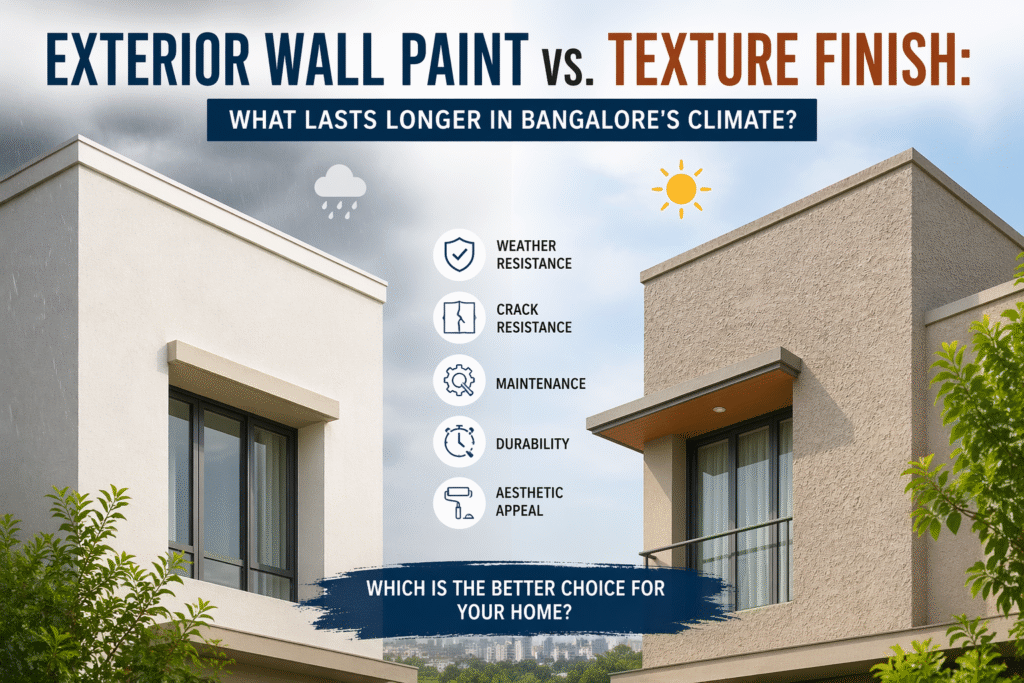
Bangalore’s climate, with its monsoon rains, moderate temperatures, and rising humidity, challenges exterior wall finishes. Texture finishes generally outlast standard paints due to superior weather resistance, though premium paints can compete with proper application.
Bangalore’s Unique Weather Demands
Bangalore features a tropical savanna climate, averaging 25-30°C year-round, with heavy southwest monsoons from June to September bringing 900-1,000 mm of rain. High humidity (60-80%) promotes mold, while dust and occasional heat accelerate fading and peeling.
UV exposure degrades pigments over time, and temperature swings cause expansion-contraction cycles that crack brittle coatings. Finishes must handle moisture without blistering, resist algal growth, and maintain adhesion on porous masonry common in local homes.
Proper surface prep, like priming, extends life for both options, but climate favors flexible, thick coatings over thin films.
Standard Exterior Paints Explained
Exterior paints, typically acrylic emulsions or latex-based, form a thin protective film (50-100 microns thick). Brands like Asian Paints Apex or Berger WeatherCoat use silicone additives for water repellency and UV blockers.
They offer smooth, vibrant finishes ideal for modern villas, with easy color changes. However, in Bangalore’s wet-dry cycles, they peel if moisture penetrates, lasting 3-5 years on average before touch-ups.
Premium elastomeric paints stretch up to 300% to bridge cracks, boosting longevity to 7-10 years with anti-fungal properties.
Texture Finishes: Built for Durability
Texture finishes, like plaster-based or acrylic textured coatings (e.g., Dunge, Sandune, or roller textures), add 1-5 mm depth, creating a rugged surface that hides imperfections from settling foundations.
Applied via spray or trowel, they incorporate aggregates for grip and flexibility, resisting scratches, impacts, and erosion better than paint. In humid tropics, their breathable matrix allows vapor escape, preventing blisters.
Low maintenance—no frequent repaints—and thermal insulation reduce energy bills. Popular in Bangalore for independent homes, they mimic stone or stucco affordably.
Direct Durability Comparison
Texture finishes last 8-15 years in Bangalore’s conditions, outpacing standard paints (3-7 years) due to thickness and resilience. They conceal cracks up to 2mm, while paints highlight them, demanding perfect prep.
In monsoons, textures shed water faster; paints absorb if topcoated poorly. UV fading hits paints first, but textured pigments embed deeper.
Cost-wise, paints run ₹20-50/sq ft (initial), textures ₹50-100/sq ft, but textures save on repaints every 5 years vs. paint’s cycle.
Real-World Performance Data
Field reports from Bangalore painters note standard paints failing post-monsoon (peeling on 30% of jobs within 2 years), while textures hold on 80% of villas over 10 years. Premium paints like 100% acrylics match mid-tier textures at 7-8 years.
A 2025 study on Indian exteriors showed textured coatings retaining 90% integrity after 5 wet seasons vs. 70% for emulsions. Heat (up to 35°C) fades light paints 20% faster, but textures’ depth masks it.
User reviews praise textures for dust resistance in urban Bangalore, where pollution abrades smooth paints.
Choosing Based on Home Type
For new villas with smooth plaster, premium paints suffice if budgeted—opt for anti-algal satin finishes. Older bungalows or uneven walls favor textures to mask settling cracks from clay soils.
Villas with brick facades pair well with rustic textures; apartments lean paint for sleek looks. Always use alkali-resistant primers on fresh cement.
Consider aesthetics: Paints allow bold combos (ivory-walnut, terracotta-sand); textures add drama but limit color shifts.
Application Tips for Maximum Life
Prep is 70% of success: Power-wash, fill cracks >1mm, apply 2 primer coats (24-hour dry). For paints, 2-3 topcoats; textures need skilled applicators to avoid weak spots.
Monsoon-proof by painting in dry months (Dec-Apr). Add silicone sealants on edges. Annual hose-down prevents algae; recoat textures at 10 years, paints at 5.
Hire certified painters—poor mixing halves lifespan.
Cost-Benefit Over 10 Years
Initial paint job (2,000 sq ft home): ₹1-2 lakh, with 2 repaints: ₹3-4 lakh total. Texture: ₹2-3 lakh upfront, one refresh: ₹2.5-3.5 lakh—often cheaper long-term.
Energy savings from textures’ insulation (2-5% AC reduction) add value in Bangalore’s mild-but-humid summers.
Maintenance Routines
Paints: Quarterly dust-off, annual mildew check; spot-prime peels. Textures: Bi-annual rinse, fungicide spray if mossy. Both benefit from shade trees or overhangs.
Final Verdict: Texture for Longevity
In Bangalore’s rainy, humid climate, texture finishes last longer (10+ years) than paints (5-8 years), offering better crack resistance and low upkeep. Choose premium elastomeric paint for budget sleekness, but textures win for durability on most homes.